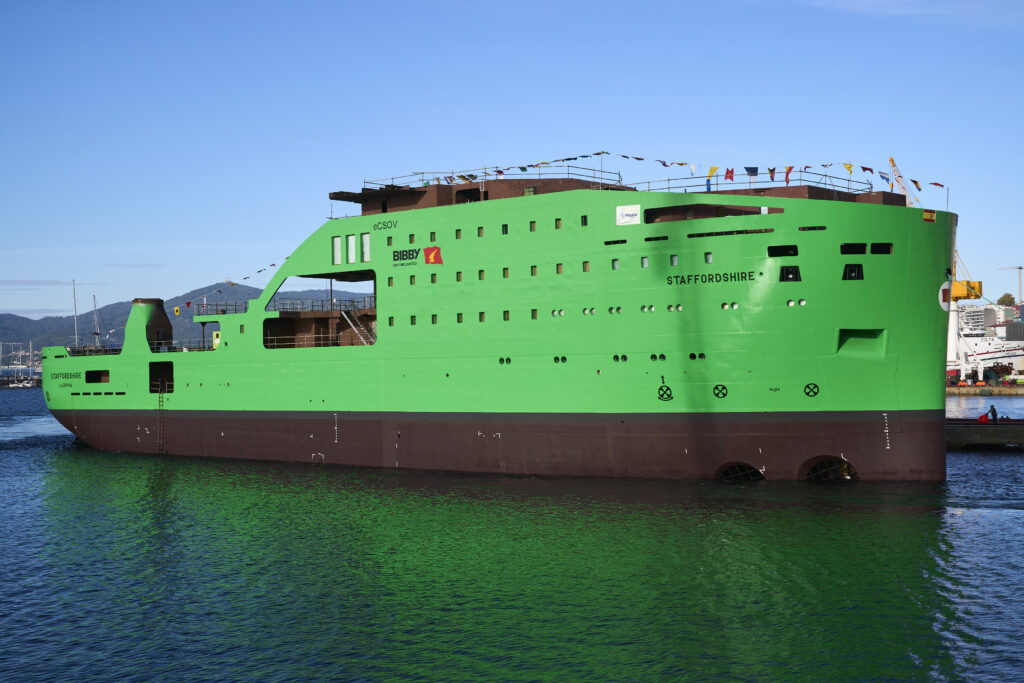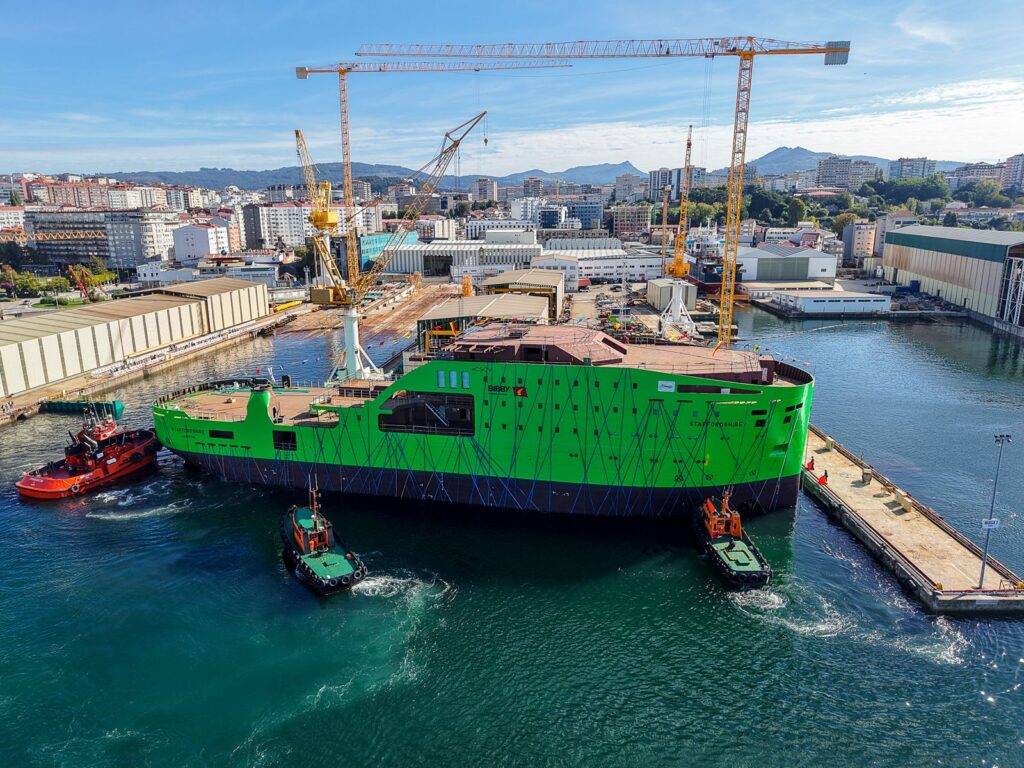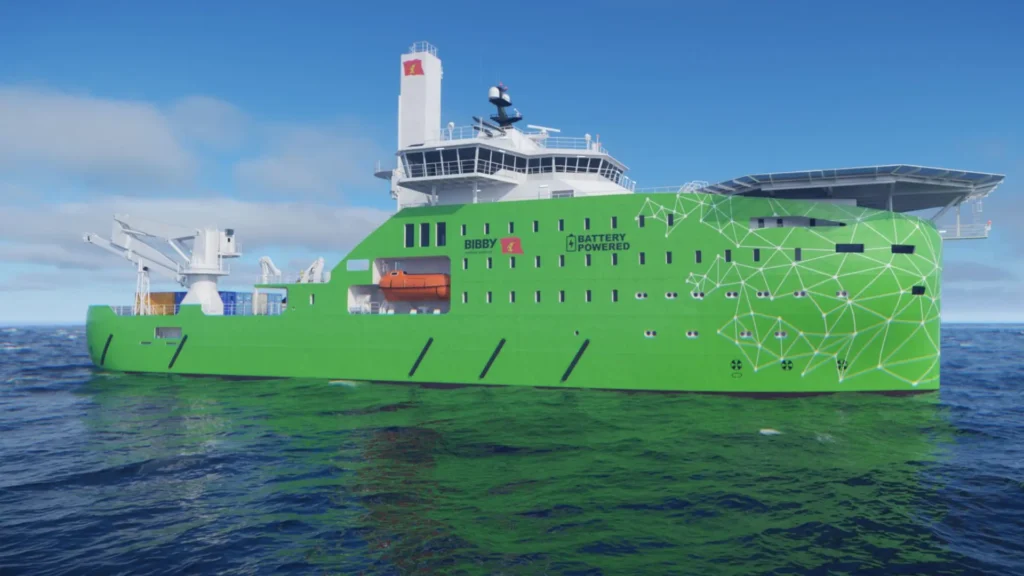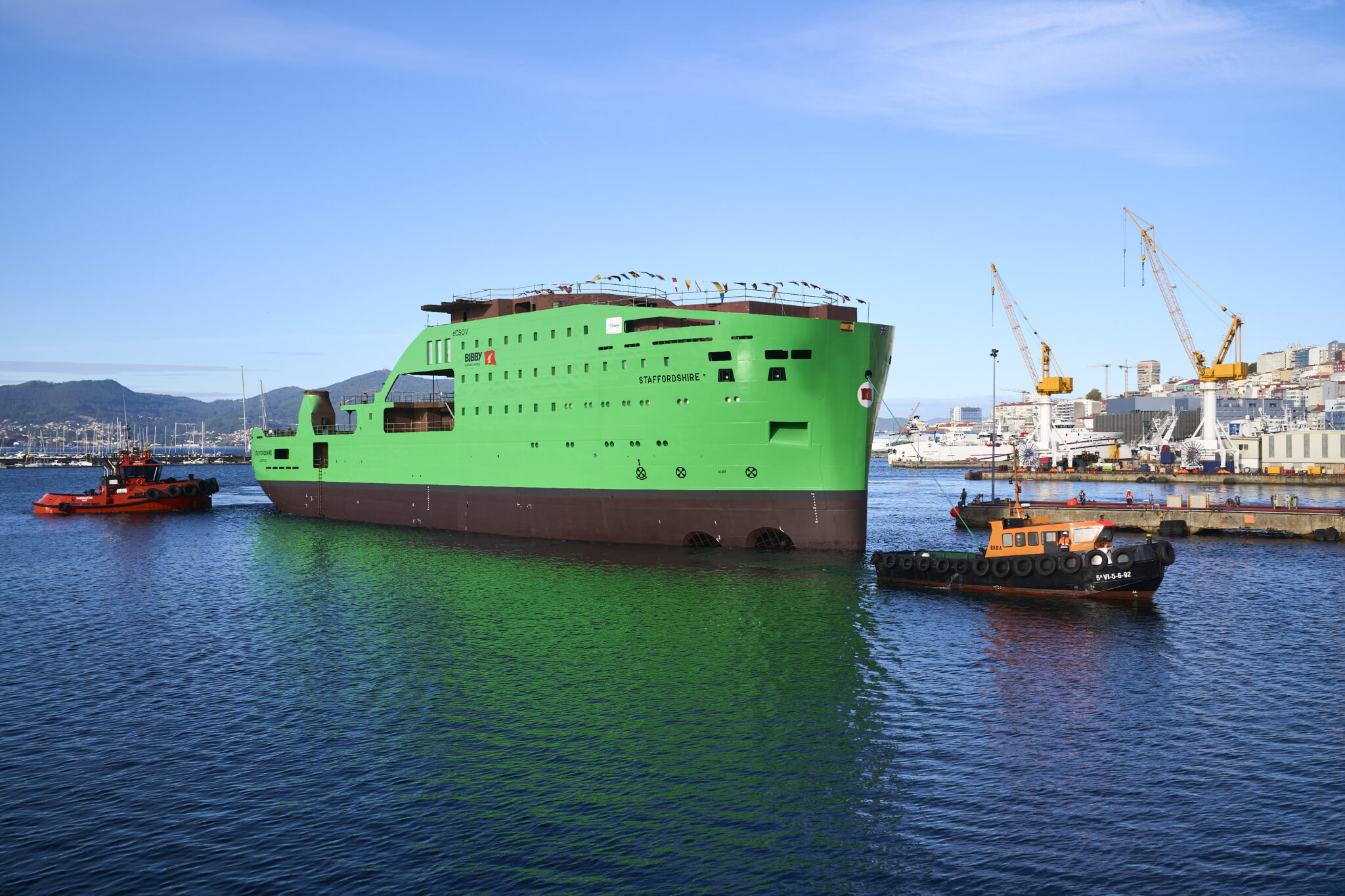
In a recent interview with Celia Conna of Maritime Reporter TV, Bibby Marine’s Fleet Director Gavin Forward sat down to talk through the design philosophy behind the eCSOV, currently under construction at the Armon Shipyard in Vigo and due for commissioning in 2027. Watch the full interview here, or read Maritime Reporter’s accompanying feature. Among the topics covered is why a vessel that wasn’t designed to reduce underwater noise ended up doing exactly that.
Offshore wind’s environmental case usually starts and ends with carbon. But beneath the surface, the industry is quietly creating a different problem. Shipping noise now dominates the underwater soundscape of the North Sea, and according to the Oslo and Paris Conventions (OSPAR), background noise in the busiest shipping lanes exceeds natural levels by more than 20 decibels for more than half the time. For the harbour porpoise, the North Sea’s most common cetacean, that’s a near-constant disruption to the echolocation it relies on to feed and navigate.
Construction noise gets most of the regulatory attention, and rightly so. Piling is loud, but it’s also temporary. What happens for the 25 to 30 years after commissioning, while a fleet of vessels works a windfarm around the clock, receives far less scrutiny. As the North Sea’s 120 windfarms and roughly 45GW of capacity keep growing, so does the vessel traffic required to service it.
It’s a problem Forward is careful to put in context. “We didn’t design this vessel specifically around minimising underwater radiated noise,” he tells Conna. “Rather, a lower URN is a welcome benefit of a vessel that’s ultra-efficient and battery-powered.”
Two sources of noise, removed rather than reduced
The eCSOV’s battery-first architecture means the battery pack, not the engines, is the vessel’s primary power source. For extended periods, the engines can be shut down entirely, removing one of the two biggest sources of underwater noise before it’s generated rather than trying to insulate or dampen it afterwards.
The second source is propulsion. Kongsberg’s rim-drive thrusters integrate the electric motor directly into the propeller, eliminating the gearbox and the mechanical vibration and tonal noise that comes with it. The design also smooths water flow through the propeller, reducing cavitation, which is one of the most common sources of underwater noise on a conventional vessel.
Together, the two are expected to deliver a 40-60% reduction in underwater radiated noise compared with a conventional vessel, with Bibby targeting DNV’s Silent-E and Silent-A notations to certify it.
“Rather than trying to reduce that noise, we just get rid of it altogether,” Forward says. “We don’t have it in the first place.”
The benefit is greatest during dynamic positioning and gangway operations, where CSOVs spend much of their working lives. Instead of engines constantly ramping to match fluctuating thruster demand, the battery responds directly. The eCSOV’s gangway, which operates from either side of the vessel at angles up to 60 degrees, lets the vessel sit in a more favourable position relative to wind, wave and current. Less energy needed means less thrust, and less thrust means less noise.
The commercial and environmental case, combined
The same design choices that reduce URN also cut operating costs. Battery prices have fallen by as much as 70% over the past three years, Forward tells Conna, while performance and energy density have continued to improve. That shift brought Bibby’s Series 2 design within 10% of a conventional vessel’s capital cost, down from a far wider gap when design work began in 2023.
Over a 10-year wind farm charter, Bibby estimates the eCSOV could deliver around $6 million in operating cost savings compared with a conventional vessel, through lower fuel consumption, fewer engine running hours, reduced maintenance, and less exposure to the carbon costs and emissions charges the sector is moving toward.
“Design for where the industry’s going, rather than how it’s been done in the past,” Forward advises other shipowners in the interview. “Look at electrification not simply as a decarbonisation requirement, but as an opportunity to build a better, more efficient and more resilient vessel.”
Watch the full video below, or read the full write up in Maritime Reporter