
Myth: Offshore charging is too complex, too speculative, or too expensive to be realistic.
Offshore charging is often framed as one of the big future hurdles in vessel electrification. In reality, the bigger challenge is not whether the technology works, but how quickly the industry is prepared to deploy it. That is one of the clearest messages from our latest research. Offshore charging infrastructure is already proven and scalable, and the technology required to support charging-capable vessels is commercially available today. Integration into wind turbine generators is already solved. The conversation, therefore, should be moving away from technical questions and towards deployment ones.
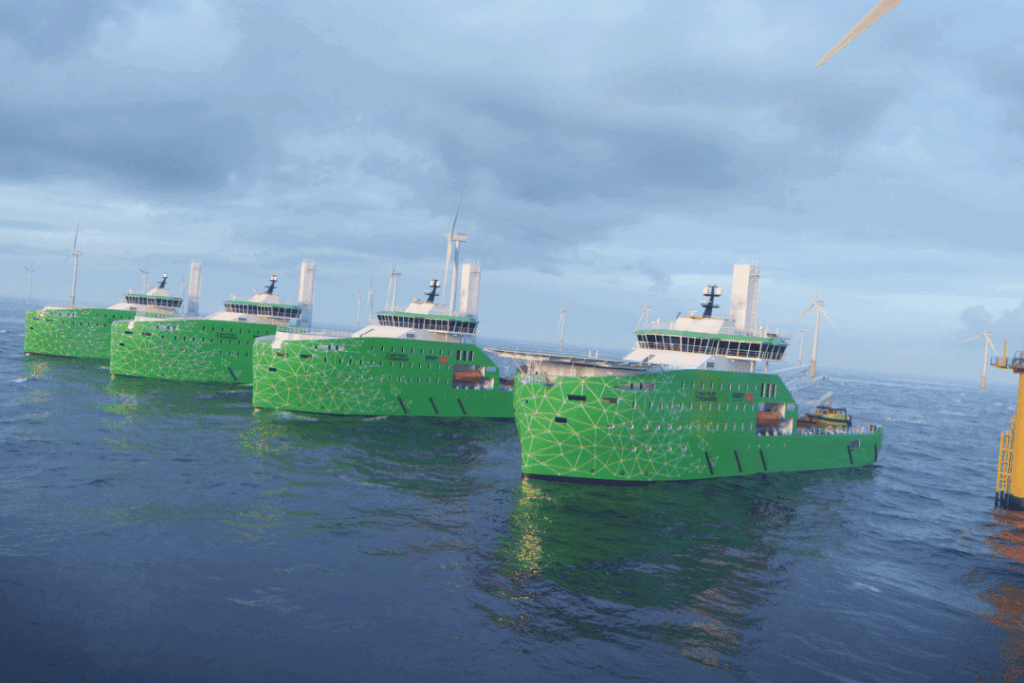
Offshore charging is what unlocks the full value of an eCSOV. While hybrid-electric vessels offer lower operating costs from day one, offshore charging extends that advantage by enabling fully electric in-field operation. This means lower operating costs, zero emissions during field deployment and reduced emissions on return-to-port voyages. It also improves the working environment onboard, reinforcing the wider operational case for electrification.
By adding new hardware to a wind farm offshore charging can radically improve the economics of offshore operations over the life of an asset. Developers investing in offshore charging want confidence that the returns are real, whether through lower operating expenses, reduced emissions-tax exposure, or by using their own energy to power vessels offshore. Regulators and policymakers have a role to play in making sure the economics stack up to encourage investment today and not at some undefined point in the future.
That is why licensing, permitting, and cross-sector coordination matter so much. Offshore charging is not a vessel issue alone. It requires alignment with vessel owners, offshore wind developers, turbine OEMs, charging technology providers, class, and regulators. Without that alignment, even proven infrastructure can be slow to scale. Regulated effectively offshore charging can become a practical enabler of lower-cost, lower-emission operations.
Bibby Marine’s own work with Stillstrom and Kongsberg Maritime shows what that process looks like in practice. Since signing a collaboration agreement in 2025, the companies have been developing a compatibility framework for offshore charging systems on next-generation eCSOVs, covering technology, safety and operational alignment. That work has progressed through joint workshops, site visits, live tracking of vessel-system interfaces and ongoing coordination around connector development and certification with DNV and other suppliers.
What is important is not just the partnership itself, but what it represents. This is no longer a theoretical exercise. The industry is now working through the practical realities of deployment, from charging regimes in changing weather conditions to crew training, operational maintenance and dynamic positioning interactions. In doing so, these first projects are also helping establish the classification guidance and operational standards that future offshore charging projects can build on.
So, when people ask whether offshore charging infrastructure is realistic, the better question may be whether the sector is ready to treat it as part of mainstream offshore wind planning. The technology exists, and the vessel compatibility work is underway. The value case is clear, what’s needed now is the regulatory and commercial environment to support rollout at pace.
Bibby Marine’s first eCSOV, a plug-in electric hybrid currently under construction at Armon Shipyard in Vigo, Spain, will be commissioned in 2027, and offer operators immediate savings over conventional vessels.
Bibby Marine has drawn together technology partners including Kongsberg, Corvus Energy and Stillstrom and laid the keel of its hybrid-electric eCSOV at the Armon shipyard in Vigo, Spain in 2025. The business expects to commission the new vessel in mid-2027. CSOVs are a crucial vessel class for offshore wind and will be tax liable for their carbon emissions under the EU’s emissions trading system and its FuelEU Maritime carbon intensity standards. Driving this vessel class to electrification will be an important step towards lowering costs and supporting offshore wind’s decarbonisation mission.
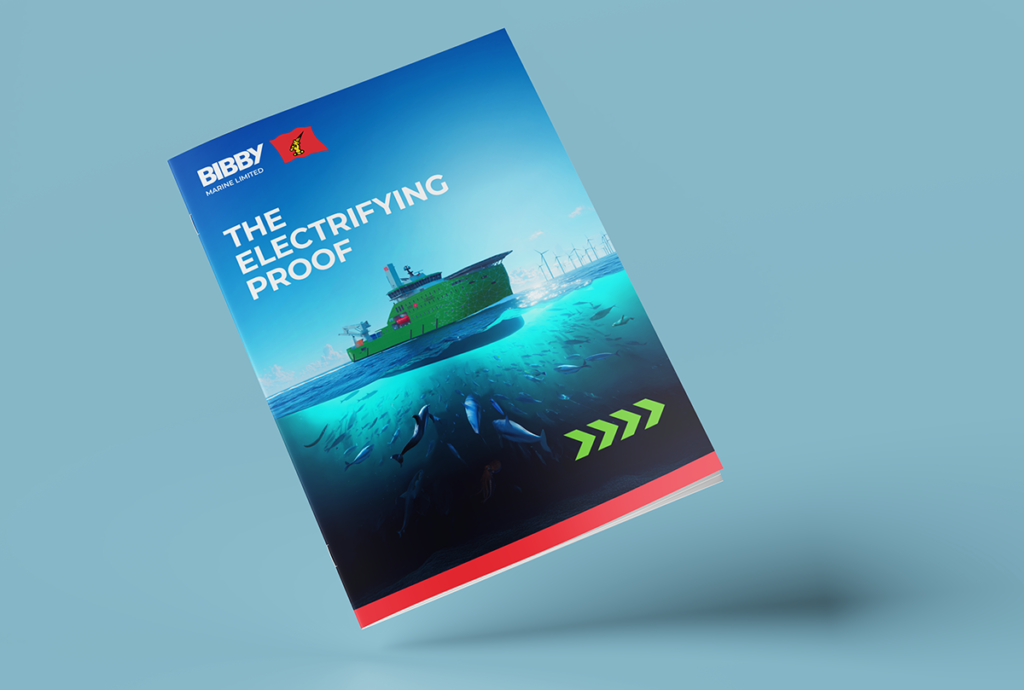
Bibby Marine’s whitepaper, The Electrifying Proof, is available to download here.
E-Mission Zero – A mission to decarbonise offshore wind
To learn more about Bibby Marine’s clean energy vision and its zero-emission eCSOV project, visit: E-Mission Zero