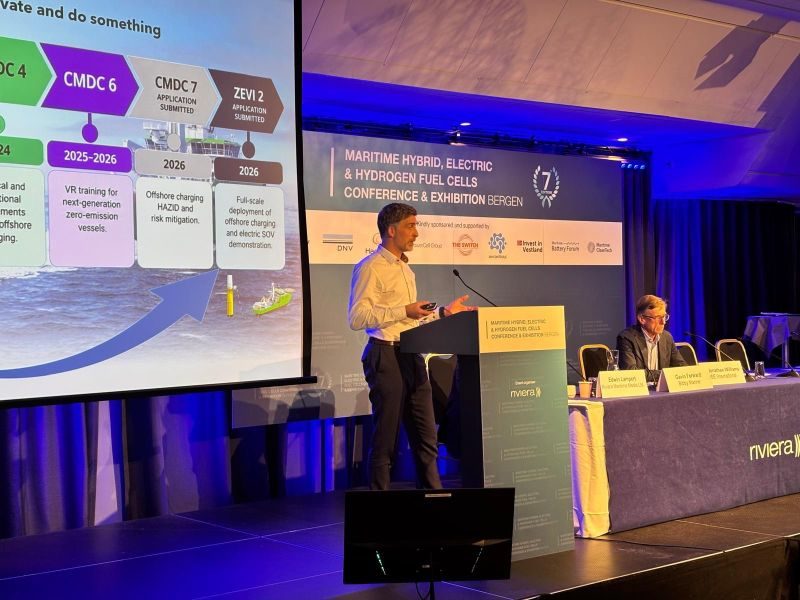
Last month, Gavin Forward, Bibby Marine’s Fleet Director, spoke at Riviera’s Maritime Hybrid, Electric & Hydrogen Fuel Cells Conference & Exhibition in Bergen. Over two days, operators, shipyards and technology suppliers showed how far battery-powered shipping has come and where it is still held back.
Battery systems are getting bigger and the economics are improving. This was a clear outcome of the conversation, where Hanwha Power presented battery-powered feeder containerships for intra-European trades. It modelled payback periods of between 4.6 and 6.7 years, depending on whether batteries cost $140 or $210 per kWh. Corvus Energy showed cruise ship concepts developed with Meyer Werft, with battery systems from 550 MWh up to 1.2 GWh.
“A few years ago, a gigawatt-hour battery on a ship sounded like science fiction. In Bergen, it was on a slide as a design concept,” said Gavin. “The vessel technology is recognised and accepted. It’s now simply a case of whether the infrastructure and policy around it can keep pace.”
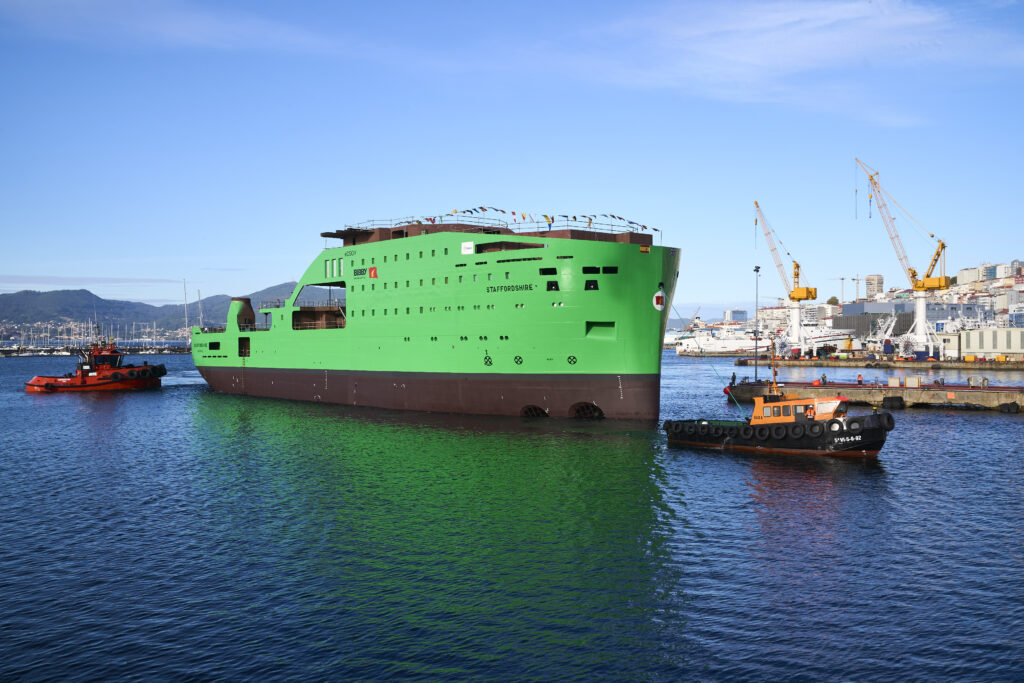
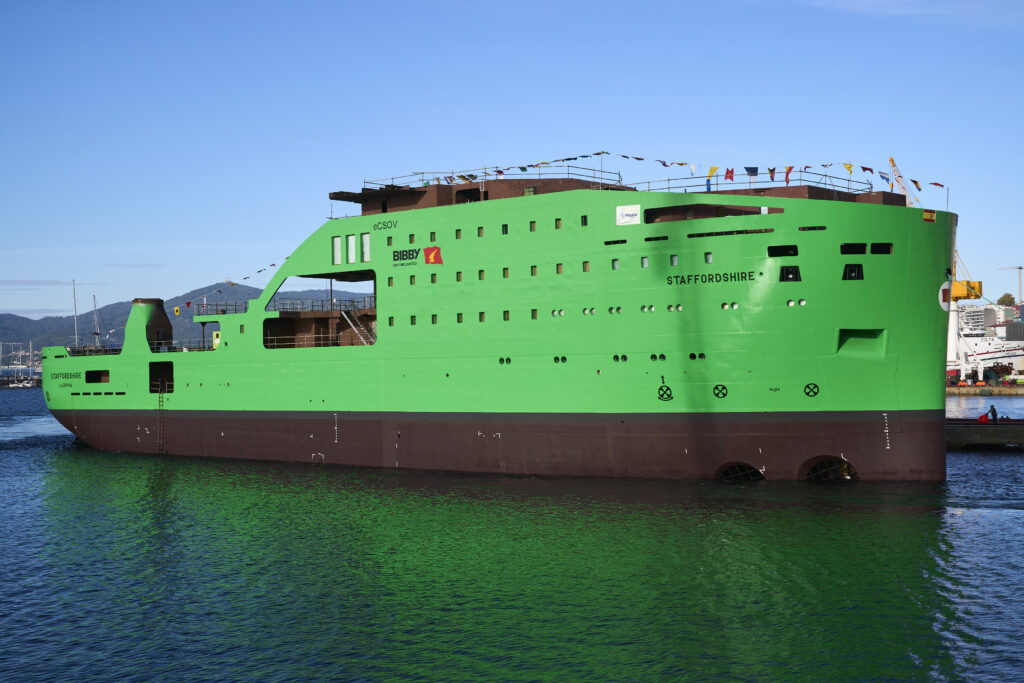
Bibby’s eCSOV, Staffordshire, due for delivery in 2027, carries a 24.4 MWh battery, and was the focus of Gavin’s presentation. It can operate fully with or without offshore charging and can recharge at a wind farm in under five hours. Using that capability depends on rules that were never written with it in mind.
The UK’s offshore wind framework was designed to export power, not to use it offshore. Responsibility for vessel charging is split between The Crown Estate, the Department for Energy Security and Net Zero, and the Low Carbon Contracts Company. There is no established way to price the electricity, even though an electric service vessel needs only around 6 GWh a year. That is roughly 0.15% of a 1 GW wind farm’s annual output.
There are signs of progress, with Gavin pointing to moves to build charging into future seabed leasing and a possible route through the CfD framework that would improve the economics of charging.
Leo Hambro, CEO at Tidal Transit, also presented on offshore charging. Tidal Transit is part of the cross-industry working group Bibby helped set up in 2025, alongside Maritime CleanTech, Norwegian Offshore Wind, Stillstrom and others.
“Electrification only scales when the technology, the policy, operational readiness and the commercial case all move together,” said Gavin. “Bergen showed the technology is moving. The rest needs to catch up.”