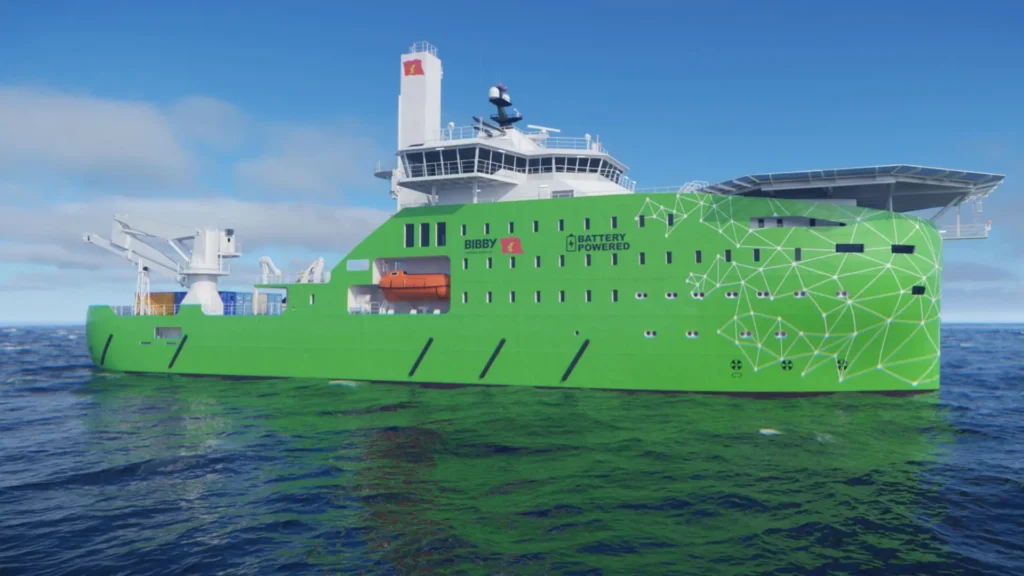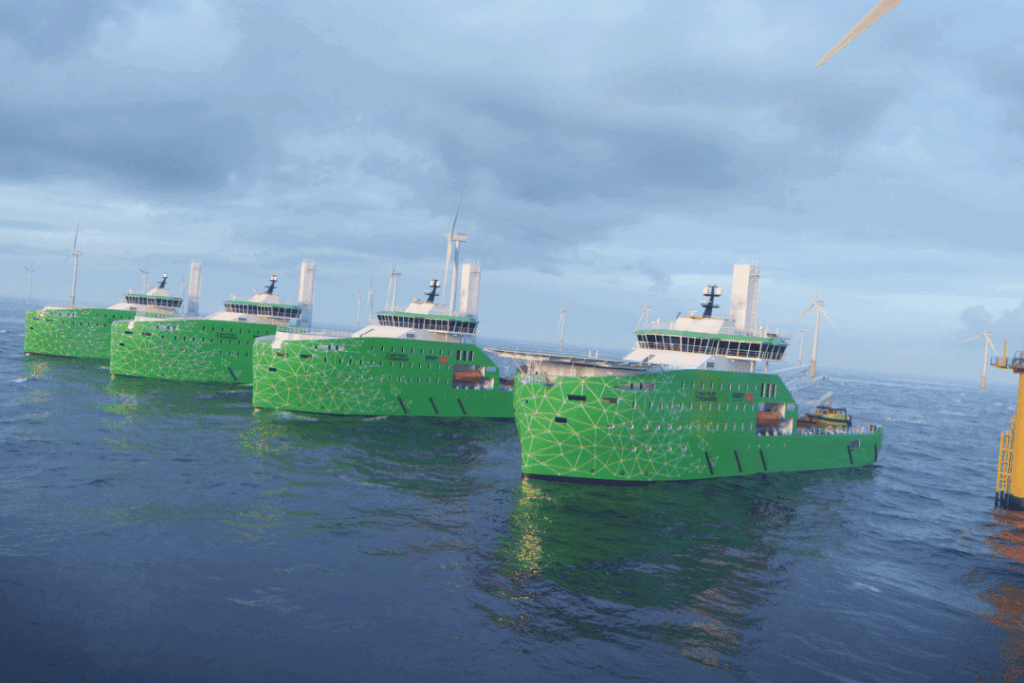

This blog is part of a series unpacking our new whitepaper, The Electrifying Proof, which sets out the commercial case for electrifying Commissioning Service Operation Vessels.
Offshore charging offers wind farm owners and operators an attractive option for mitigating curtailment in a high-renewables power system. Rather than allowing available renewable generation to be reduced because of grid constraints, excess power can be put to productive use offshore. A more flexible regulatory approach is needed to enable more intelligent use of excess power, including through self-consumption.
As the proportion of renewable energy increases in the power mix, and markets such as the UK look to ways they can mitigate the impact of curtailment particularly through the addition of storage, offshore wind owners and operators need to embrace the opportunity curtailment offers to create operational efficiencies and more sustainable project budgets. Taking an intelligent approach to managing excess generation, the industry needs to ask how it can respond to excess generation more intelligently.
For years, curtailment for grid balancing has been viewed as wasteful, costing the value chain in lost time, power and money. Whether turbines are slowed down or generation is halted entirely, the outcome is the same – renewable energy that could have been used is lost. Batteries are changing the debate, and electric-powered offshore service vessels, like Bibby Marine’s eCSOV, can be part of that shift. Technology developments in offshore charging are creating more flexible ways to use excess power, providing valuable alternatives to reducing renewable generation when network constraints prevent all available electricity from reaching demand centres. While curtailment does not always mean generation is completely shut down, it does mean clean energy is prevented from being fully utilised.
Why does this matter? Because the scale of the challenge is growing. Reuters recently reported that more than 3.6TWh of clean power was curtailed in Germany and Spain in May 2026 alone. In the UK, wind curtailment costs exceeded £1 billion in 2025, according to Octopus Energy’s “Wasted Wind” tracker, while Scottish wind farms were paid around £343 million to reduce output. These numbers are a sign that clean generation is scaling faster than the systems needed to absorb and use it efficiently.
This is why flexibility has become such a defining theme in the wider energy conversation. Reuters has also reported that Europe’s co-located renewable power and battery capacity is expected to grow by more than 450% by 2030. That is not a new realisation. The industry has long recognised the challenge of intermittency. What has changed is the ability to do something about it with dispatcher energy storage solutions.
The flexible response to curtailment should not simply focus on onshore storage or grid reform. Operations in the offshore wind sector can be considered part of the solution. Offshore wind farms typically have to deal with curtailment because of a transmission bottleneck, as in Scotland, or a grid absorption limit, as in Germany and Spain. However, in-field vessel charging offers a different kind of flexibility by consuming electricity at the point of generation, before it is transmitted down a constrained network. With the technology now available to provide offshore charging, the possibilities of this approach are restricted by the supply agreements wind farm operators have with their offtake agreements, in which curtailment is the default option.
Offshore wind support vessels, operating in field, are a distinct case within the wider maritime energy transition. In the wider maritime sector, green electricity is converted into low-carbon e-fuels, which are then used aboard to cut emissions. Offshore wind service vessels can cut out a step and use low-carbon electricity directly where infrastructure and regulation allow.
Curtailment adds to the business case for vessel electrification, providing a solution to an enduring issue for the industry and extending flexibility and optionality for operators. The economic benefits of hybrid-electric eCSOVs through lower fuel consumption and more efficient operations are clear: modelling set out in Bibby Marine’s whitepaper shows operating costs falling by up to 40% from day one, even where offshore charging is not available. Offshore charging enables operators to go further in their fuel savings by eliminating the need to use generators to produce electricity when at sea, pushing savings over conventional vessels to 70%. By changing regulations to make it possible to charge electric vessels with renewable power that would otherwise be curtailed, the industry can find efficiencies in solving a problem that has become accepted as the cost of doing business over the years.
The technology required to support this shift is also moving quickly. Bibby Marine’s recent whitepaper highlights how battery prices have fallen by more than 30% in the last two years, while energy density has increased by 15%, helping narrow the gap between hybrid-electric and conventional vessel CAPEX.
It also notes that offshore charging can extend an eCSOV’s operational capacity in the field. Bibby Marine is already putting this concept into action, working with Stillstrom since April 2025 on a compatibility framework for offshore charging systems on next-generation eCSOVs, covering the technology, safety and operational alignment needed to make in-field charging a reality. The challenge now is ensuring a regulatory and commercial framework that evolves quickly enough to let that capability be used at scale and optimally.
Offshore charging will widen the possibilities of electric vessel use in the offshore wind industry, by driving cost savings beyond those that can be realised with hybrid electric vessels. Accessing electricity that would otherwise be partially or wholly curtailed adds to those possibilities. Electric-powered offshore service vessels offer an additional way to benefit from curtailment in an expanding industry, if the offshore wind sector can agree a more flexible approach to managing excess power production. A review of regulation is required to support optimised responses to curtailment, as part of a programme that encompasses interconnectors, storage and wider grid management.
Offshore charging of support vessels reduces fuel use, lowers emissions, improves energy resilience and links offshore wind generation to offshore wind operations to the commercial benefit of windfarm owners and operators. For a sector under pressure to cut costs as well as carbon, that is an opportunity worth building into its future.
Bibby Marine has drawn together technology partners including Kongsberg, Corvus Energy and Stillstrom and laid the keel of its hybrid-electric eCSOV at the Armon shipyard in Vigo, Spain in 2025. The business expects to commission the new vessel in mid-2027. CSOVs are a crucial vessel class for offshore wind and will be tax liable for their carbon emissions under the EU’s emissions trading system and its FuelEU Maritime carbon intensity standards. Driving this vessel class to electrification will be an important step towards lowering costs and supporting offshore wind’s decarbonisation mission.
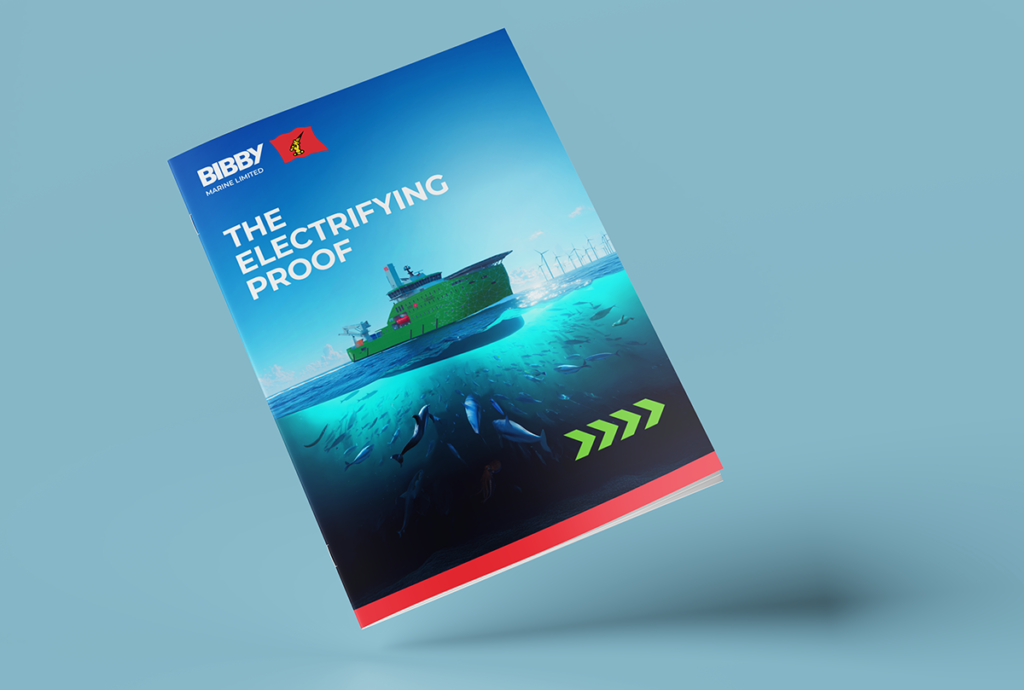
Bibby Marine’s whitepaper, The Electrifying Proof, is available to download here.
E-Mission Zero – A mission to decarbonise offshore wind
To learn more about Bibby Marine’s clean energy vision and its zero-emission eCSOV project, visit: E-Mission Zero