

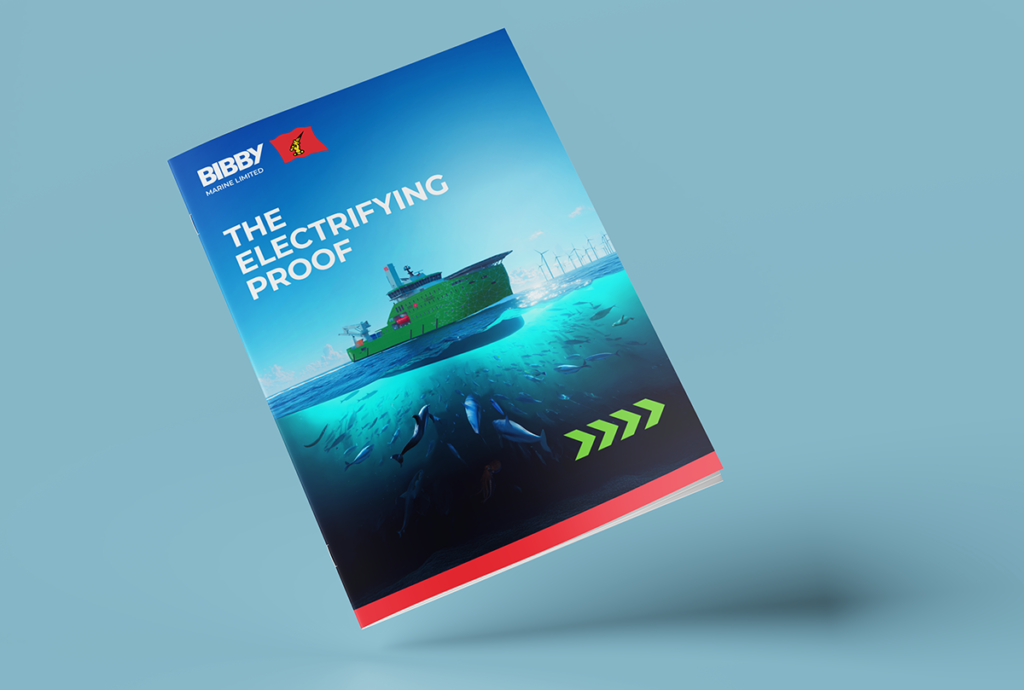
This blog is part of a series unpacking our new whitepaper, The Electrifying Proof , which sets out the commercial case for electrifying Commissioning Service Operation Vessels. Here, we look at day rates and address a common assumption in the market: that going electric must mean paying a premium.
Myth One: An electric vessel is all very well, but it will only deliver value once offshore charging infrastructure is fully in place.
Our analysis shows the electric-hybrid eCSOV offers significant operational cost savings compared with a conventionally fuelled vessel. Regardless of whether charging is available onshore or offshore, the diesel-electric hybrid design of Bibby Marine’s eCSOV means the vessel operates more efficiently from day one. That translates into lower energy consumption, lower fuel use, and reduced carbon-cost exposure from the outset. For operators, cost savings can be up to 40% compared with similar vessels in the market.
The reason lies in the vessel’s power philosophy. Rather than relying on combustion engines as the primary propulsion source, the eCSOV is built around battery-first propulsion. Dual-fuel methanol generator sets are used to charge the batteries when external charging is not available, and propulsion is provided by electric motors powered by the batteries. The generator sets are sized for optimal battery charging, and can be run at constant speed and load in their most efficient operating range to charge the batteries. Providing power in this way avoids the inefficiencies of conventional diesel-electric setups, where engines must continually respond to changing propulsion demand and fuel consumption cannot be minimised.
That is why hybrid operation doesn’t need to be seen as a halfway house. Commercially it is an operating mode that can deliver meaningful benefit. Even before offshore charging becomes widespread, hybrid-electric vessels change the economics of service vessel operation by reducing fuel burn. Add in avoided emissions taxes, and the technology offers an advantage that promises to ramp up over time as carbon regulation and costs tighten.
That cost advantage becomes even more significant when viewed through the lens of total cost of ownership. In today’s volatile fuel market, the gap between conventional and hybrid-electric operations is widening sharply. Based on current pricing, Bibby Marine’s analysis shows lifetime total cost-of-ownership savings can now exceed £14 million over a 10-year charter compared with a traditional diesel-powered vessel. This underlines a broader point around how electrification is not just a decarbonisation pathway, but an increasingly compelling long-term commercial strategy.
The same design also creates a clear pathway to even greater savings as infrastructure develops. The full potential of electrification can be unlocked by charging batteries from shore power before a voyage and directly from the field via offshore charging stations. This would enable true zero-emission vessel operations, without running engines or gen-sets at all. Put simply, an electric-hybrid vessel offers commercial advantages today and is also ready to capture further gains as charging infrastructure scales.
Electric-hybrid vessels also offer wider operational benefits. Battery operation reduces vibration and noise compared with conventional propulsion. This creates a quieter and more pleasant working and living environment for technicians onboard. Our projections also show the design delivers a 40% reduction in underwater radiated noise and vibration compared with a conventional vessel, reducing harm to marine life.
Hybrid vessels make an important case for electrification of the offshore service fleet, as they can provide value today, before charging networks arrive in the future. The savings accumulate from day one, as a new vessel architecture delivers more efficient operations, lowering costs and the technology provides a practical route towards zero-emission servicing for the sector.
Bibby Marine’s first eCSOV, a plug-in electric hybrid currently under construction at Armon Shipyard in Vigo, Spain, will be commissioned in 2027, and offer operators immediate savings over conventional vessels.
Bibby Marine has drawn together technology partners including Kongsberg, Corvus Energy and Stillstrom and laid the keel of its hybrid-electric eCSOV at the Armon shipyard in Vigo, Spain in 2025. The business expects to commission the new vessel in mid-2027. CSOVs are a crucial vessel class for offshore wind and will be tax liable for their carbon emissions under the EU’s emissions trading system and its FuelEU Maritime carbon intensity standards. Driving this vessel class to electrification will be an important step towards lowering costs and supporting offshore wind’s decarbonisation mission.
Bibby Marine’s whitepaper, The Electrifying Proof, is available to download here.
E-Mission Zero – A mission to decarbonise offshore wind
To learn more about Bibby Marine’s clean energy vision and its zero-emission eCSOV project, visit: E-Mission Zero